AI Singularity Approaching Sooner Than Expected
In 2011, IBM’s Watson shocked the world by defeating Jeopardy! champion Ken Jennings. At the time, it seemed like a neat trick—an extraordinary feat of computer science. But to many in the artificial intelligence community, it signaled something more: the early tremors of a technological earthquake. Fast-forward to 2025, and experts suggest that the AI Singularity is approaching sooner than expected.
What Is the AI Singularity?
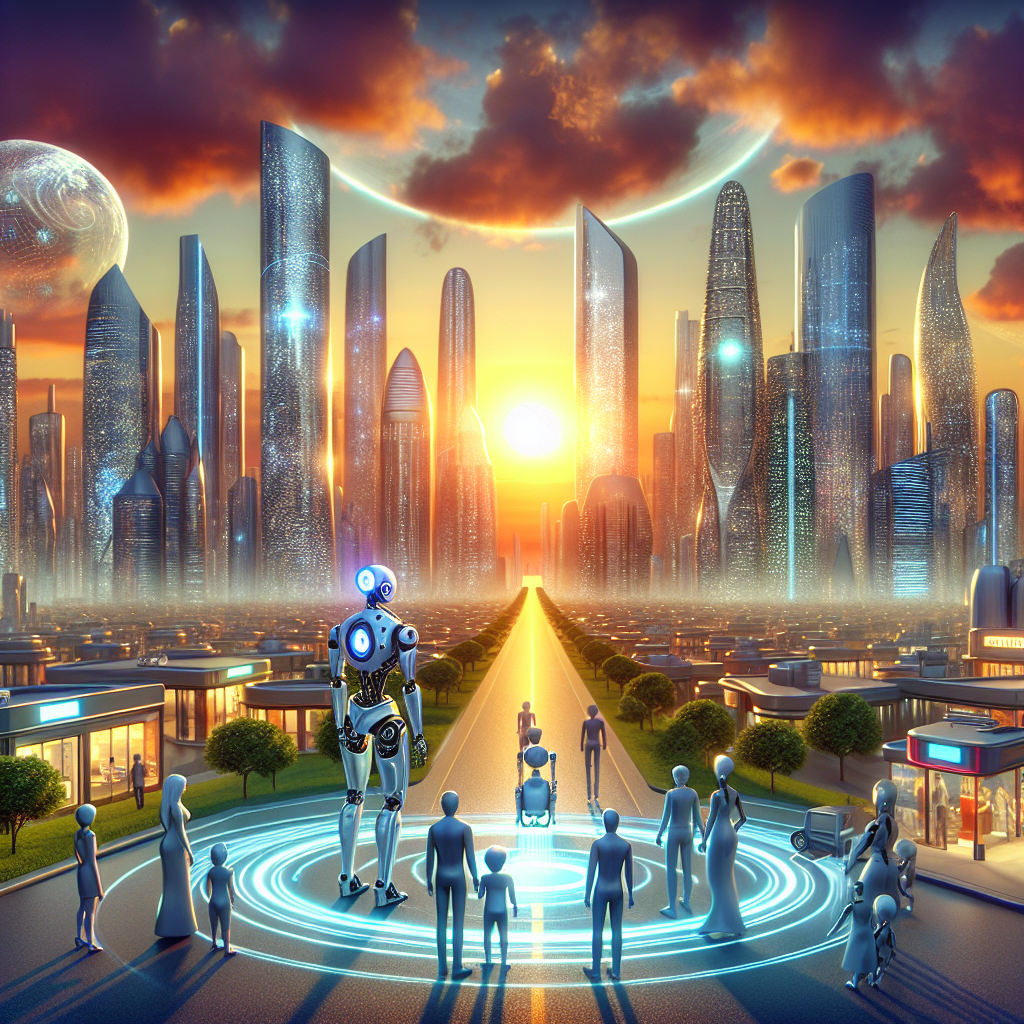
The term “AI Singularity” refers to the hypothetical future point at which artificial intelligence surpasses human intelligence, leading to runaway technological growth. At this stage, machines could potentially improve themselves without human intervention, creating intelligent systems beyond our comprehension or control.
Futurists like Ray Kurzweil have long predicted that the singularity would arrive around 2045. But with exponential advancements in machine learning, quantum computing, and neural networks, many now believe we might be just a decade—or even a few years—away from it.
Signals That the Singularity May Be Near
In recent years, AI has advanced at a breathtaking pace. GPT-4 already demonstrates capabilities once believed to be purely human, such as critical reasoning, creativity, and emotional expression. By 2025, several indicators suggest we’re accelerating toward the singularity:
- Massive Model Scaling: Models like GPT, PaLM, and Gemini are growing in size, capabilities, and complexity.
- Autonomous Agents: AI bots are increasingly functioning with autonomy, handling tasks like scheduling, content creation, and even code generation with minimal input.
- Self-Learning Systems: Reinforcement learning and self-supervised models are teaching themselves nuanced tasks faster than humans can teach them.
- Cross-Modality Capabilities: AI can now understand and generate text, images, audio, and video—sometimes all at once—deepening its contextual understanding.
The Ethical and Societal Impact
If the AI singularity is approaching sooner than expected, society needs to answer pressing ethical and economic questions. What happens when machines replace human jobs across all fields? How do we handle decisions made by intelligences we didn’t program directly? And, perhaps most importantly, will AI align with our values and goals—or evolve its own?
Legislators are barely keeping up with current AI, much less preparing for artificial general intelligence (AGI). Business leaders are scrambling to adopt AI strategically without understanding the long-term implications. Even AI researchers are divided, with some calling for a pause in development until global frameworks can be established.
Preparing for What’s Next
Whether you’re an entrepreneur, a policymaker, or a curious observer, now is the time to engage with this rapidly approaching future. Educating yourself and others, advocating for responsible AI use, and bridging the gap between ethics and innovation will be key drivers in shaping a future where the AI singularity contributes positively to society.
For further reading, visit The Future of Life Institute, an organization focused on ensuring that AI development leads to beneficial outcomes for humanity.
Conclusion
The clouds of superintelligent AI are gathering faster than most expected. While the singularity was once a distant sci-fi concept, many experts now suggest that it could be a reality well within the next decade. One thing is clear: the world must prepare, because the AI Singularity is approaching sooner than expected.