
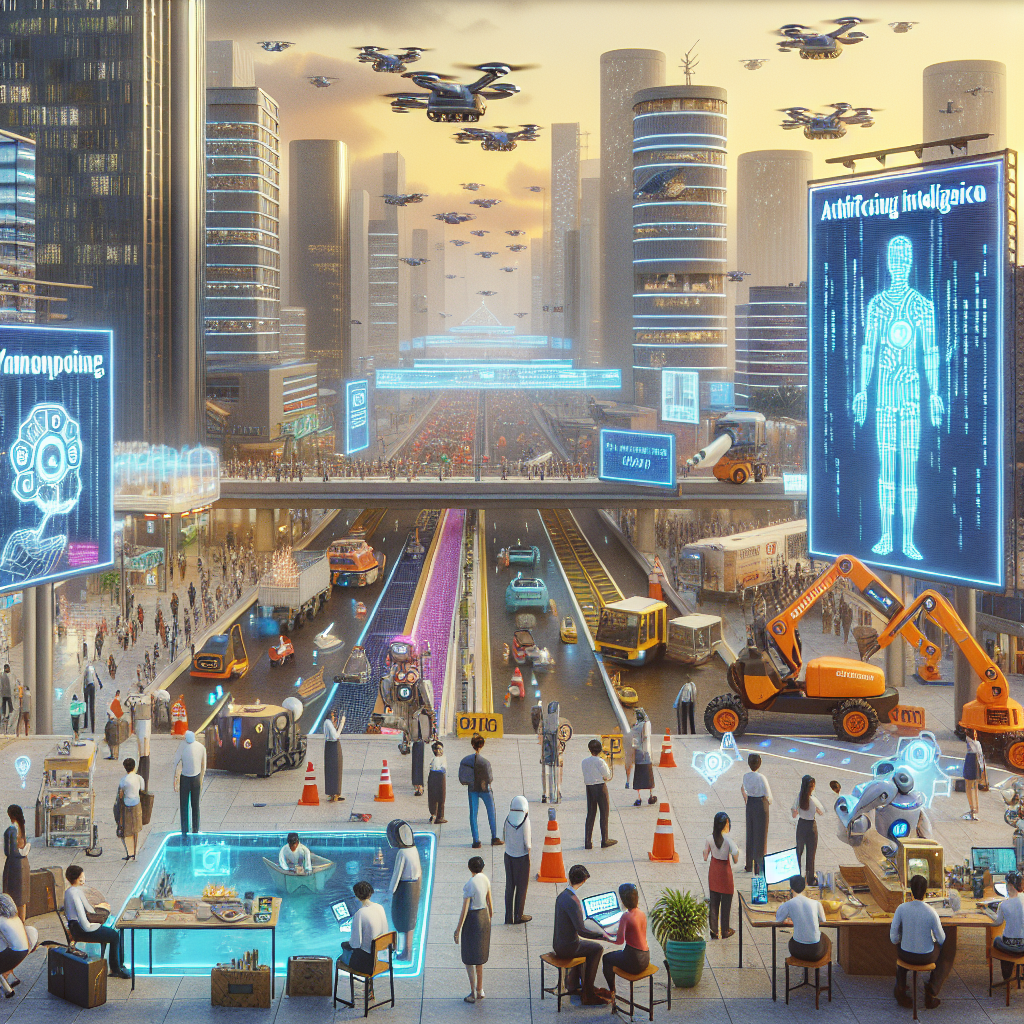
AI Job Shifts Predicted for 2026
When the first automated weaving loom arrived in British textile factories during the 18th-century Industrial Revolution, skilled weavers feared for their livelihoods. That technological leap not only displaced thousands of jobs but also paved the way for new industries and professions. Today, another seismic shift is on the horizon—AI job shifts predicted for 2026 are set to redefine the modern workforce on a scale unseen for decades.
The Rapid Rise of AI in the Workplace
Advanced artificial intelligence and automation tools are no longer futuristic concepts—they’re quickly becoming an everyday reality across multiple industries. Experts now warn that the integration of AI tools could accelerate rapidly by 2026, prompting widespread shifts in employment opportunities and workplace dynamics.
According to market analysts and recent reports, businesses are moving far more decisively towards automation. AI is already being deployed in:
- Customer service (chatbots, virtual assistants)
- Data entry and processing
- Warehousing and logistics
- Healthcare diagnostics
- Creative fields, like design and content generation
This acceleration is expected to create significant ripples through nearly every sector, from retail to finance and beyond.
Who Will Be Most Affected?
While the transition promises to enhance productivity and unlock new value for businesses, AI job shifts predicted for 2026 could leave countless workers scrambling to adapt. Repetitive, routine-based positions are at the greatest risk, with roles such as:
- Administrative assistants
- Call center employees
- Data processors
- Basic coding positions
expected to be among the first impacted by automation. However, analysts are quick to note that this wave of transformation will also generate demand for new skills and roles, reshaping the job market rather than merely shrinking it.
Opportunities in the AI-Driven Economy
Amid the concerns, there’s also optimism. Previous technological disruptions spawned entirely new professions—machine operators replaced hand weavers, and IT specialists emerged as computers took over offices. The AI job shifts predicted for 2026 could similarly give rise to:
- AI trainers and ethicists
- Machine learning specialists
- Data privacy experts
- AI maintenance and support staff
Upskilling and continuous learning will be essential for employees to remain relevant. Experts recommend pursuing training programs and certifications that focus on technology, critical thinking, and creative problem-solving as core competencies in the AI era.
How Businesses and Workers Can Prepare
Companies must anticipate the coming transition and invest in their workforce, ensuring employees have the resources to adapt. As disruptive as AI may appear, businesses that embrace change and foster a culture of learning will thrive. Workers, in turn, can take proactive steps by exploring training in digital literacy, leadership, and AI fundamentals.
For more in-depth coverage and the latest analyst predictions, visit Fox 13 News on AI’s Next Disruption.
The Takeaway
The AI job shifts predicted for 2026 are more than just a headline—they’re a signal to businesses, workers, and policymakers to prepare for a world where adaptability will be the most valuable skill. Just as the steam engine revolutionized the past, artificial intelligence is about to reshape the future of work.